
|
|
|
|
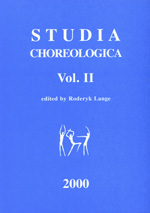 |
Studia
Choreologica Vol. II (2000)
ed.
by Roderyk Lange
ISSN 1508-1354
liczba stron: 116, ilustracje
wymiary: 146 x 210 mm
okładka: miękka, laminowana
cena: 50,00 zł
The
second volume of this series contains three studies concerned with
various issues of choreological investigation: the study by Ioannis Prantsidis
contains an analysis of the
cultural processes of dance, within a rural community, which
was originally based in Northern Thrace (now in Bulgaria).
Part of its population resettled in Macedonia (Greece) in 1925. This
gave the author a unique chance to conduct comparative
analysis between these two villages. The discourse is based on field
work, conducted by the author between 1990 and 1995.
Monika
Fink investigates “Children’s Balls
– Social Dance – Ballroom Dancing”,
during the eighteenth and nineteenth centuries, in various countries in
Europe and America. The author concludes that these balls did not
include any dancing appropriate to the children’s age.
Instead, the children were taught the current social dances of adults,
and were directed to imitate them exactly.
The actor and scholar, Zvika
Serper, is a specialist in various
genres of Japanese theatre and dance. He studied, for long periods, the
traditional performing arts in Japan, and, uniquely, appeared there in
leading theatre roles. In his article, he
analyses Maurice Béjart’s choreography
“The Kabuki”, which was commissioned
by the Tokyo Ballet Company. In this choreography, some traditional
conventions of Japanese theatre were creatively fused with Western
balletic elements.
|
horeologia,
kinetografia, notacja ruchu, notacja tańca, zapis tańca, taniec, taniec
współczesny,
taniec historyczny, taniec ludowy, warsztaty taneczne, Instytut
Choreologii w
Poznaniu, Poznań, analiza ruchu, eksploracja przestrzeni, rekonstrukcja
tańców, Roderyk Lange, warsztaty, taniec w Poznaniu, badania
nad
tańcem, Knust, Laban, letnie warsztaty taneczne, warsztaty taneczne w
Poznaniu |
|